
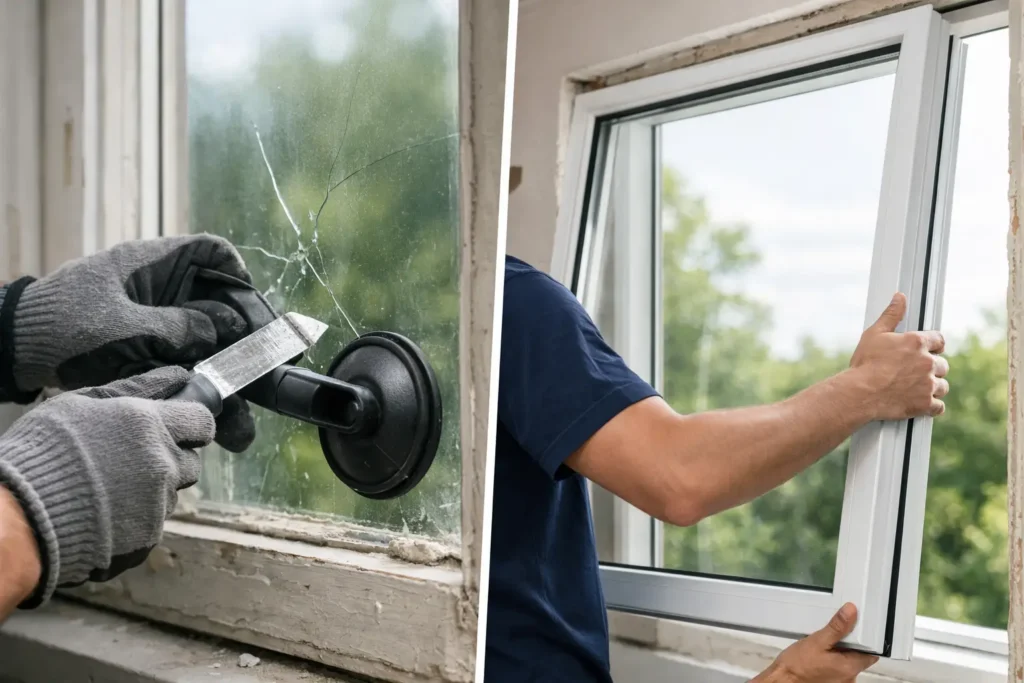
A cracked pane before a showing, a foggy bedroom window in winter, a storefront glass issue that makes customers hesitate at the door – this is where window repair versus replacement becomes a real budget and safety decision, not just a home improvement question. The right answer depends on what failed, how badly it failed, and whether fixing it will actually solve the problem for the long term.
For homeowners and property managers, the goal is usually simple: restore safety, function, and appearance without spending more than necessary. For business owners, there is another layer – downtime, curb appeal, and security. In both cases, the smartest choice is the one that deals with the actual problem, not just the visible symptom.
How to think about window repair versus replacement
Repair is usually the better option when the damage is isolated and the rest of the window is still in good shape. That might mean a chipped pane, minor hardware trouble, worn weatherstripping, or a small issue with a sliding track or latch. If the frame is solid, the glass type still fits the space, and the window opens, closes, and seals properly once fixed, repair can be the most cost-effective path.
Replacement makes more sense when the problem is larger than a single broken part. If the frame is rotting, warped, or no longer secure, if insulated glass has failed across multiple windows, or if the unit is old enough that repairs are starting to repeat, replacement often saves money over time. It can also improve energy performance, comfort, and appearance in one step.
This is why quick online advice can miss the mark. Two windows may look equally damaged from a distance, but one may need a simple glass swap while the other needs a full unit replacement because of hidden frame damage or seal failure.
When window repair is the better choice
A lot of window problems are repairable, especially when action is taken early. Small cracks, chips, broken seals in limited cases, damaged locks, rollers, hinges, or alignment issues do not always justify replacing the entire window. If the issue is affecting function but not the full structure, repair can restore performance quickly.
This is especially true for newer windows. If the window is relatively modern and the frame material is still in strong condition, replacing only the damaged glass or hardware can be the practical move. In many cases, that gets the space secured and looking right again without the higher cost of a full replacement.
Repair also works well when you need a targeted fix fast. A broken pane in a rental unit, a cracked office window, or a patio door that no longer slides correctly may be creating an immediate problem. In those situations, a focused repair can reduce disruption and restore day-to-day use quickly.
That said, repair is only worth doing when it addresses the root issue. If a contractor patches the obvious damage but leaves behind moisture problems, loose framing, or repeated seal failure, the repair may only buy a little time.
Signs a repair is likely enough
If the frame is still square and solid, the damage is limited to one area, and there are no recurring leaks or drafts, repair is often a strong option. The same applies when the glass can be replaced without disturbing the full frame and when the hardware issue is confined to parts that can be serviced.
For many homeowners, this is the sweet spot: solve the problem, control the cost, and avoid unnecessary work.
When replacement is the smarter investment
Some windows are past the point where repair makes financial sense. If you are dealing with extensive cracking, failed insulated glass, water intrusion, frame deterioration, or windows that never seem to seal right, replacement usually gives better long-term value.
Older windows are a common example. You can repair one part, then another, then another. At some point, the pattern tells you the unit is wearing out. Replacing it may cost more upfront, but it can cut down on repeat service calls, improve comfort, and reduce heating and cooling loss.
Replacement is also worth serious consideration when safety or code concerns are involved. Tempered or laminated glass may be needed in certain locations. Commercial spaces may need stronger performance from storefront glass or entry systems. If the existing window no longer meets the demands of the space, replacing it is not an upgrade for appearance alone – it is a practical fix.
For businesses, replacement can also protect the customer experience. Cloudy, damaged, or visibly aging windows affect how a property looks from the street. A clean, secure, properly fitted window or storefront glass panel sends a different message.
Signs replacement is the better call
If drafts keep coming back, condensation is trapped between panes, the frame is soft or warped, or the window has become difficult to operate even after service, replacement is usually the better answer. The same goes for multiple damaged windows in the same property, where piecemeal fixes can add up quickly.
Cost matters, but so does value
Most people start with price, and that makes sense. Repair is usually less expensive than replacement in the short term. But short-term savings are not always the same as good value.
A lower-cost repair can become expensive if it needs to be repeated or if it fails to stop leaks, drafts, or security issues. On the other hand, jumping straight to replacement for minor damage can mean paying for more work than you actually need.
The better question is not just, “What costs less today?” It is, “What solves this problem properly?” A good assessment should look at the condition of the glass, frame, seals, hardware, and surrounding area before anyone recommends one path over the other.
That is where experienced local service matters. A reliable glass company should be able to tell you clearly whether the problem is isolated or part of a larger failure, and explain the trade-off in plain language.
Energy efficiency and comfort
When people compare window repair versus replacement, energy efficiency often tips the scale. If your current windows are letting in cold air, creating hot spots, or showing signs of seal failure, replacement may offer a noticeable improvement in comfort.
That does not mean every drafty room needs all-new windows. Sometimes the issue is failed weatherstripping, poor alignment, or damaged glass in one section. Those can often be repaired. But when the insulating performance of the full unit has broken down, replacement is usually the more dependable fix.
For homes, that can mean better indoor comfort and potentially lower utility strain. For commercial buildings, it can support a more stable interior environment for staff and customers.
Residential and commercial decisions are not always the same
In a home, the decision often comes down to comfort, cost, appearance, and safety. In a commercial setting, timing and security carry more weight. A cracked storefront window or damaged office glass panel may need immediate attention even before the final repair or replacement decision is made.
Property managers also face a different equation. They are balancing tenant satisfaction, maintenance budgets, liability concerns, and long-term building condition. In those cases, the best choice is often the one that reduces repeat issues across the property, not just the one with the lowest invoice today.
This is why a one-size-fits-all answer does not work. The right choice for a single-family home with one cracked pane may be completely different from the right choice for a retail space with older glass, higher traffic, and ongoing wear.
What a professional assessment should cover
Before deciding, the window should be checked for more than visible damage. The condition of the frame, the type of glass, the seal integrity, the hardware, and how the unit operates all matter. Moisture intrusion, hidden structural wear, and repeated opening or locking issues can change the recommendation fast.
A dependable service provider should also explain urgency. Some problems can wait a short time for scheduled work. Others, especially broken glass or compromised storefronts, need immediate attention to protect people and property.
Companies like VL Group Glass Services handle both urgent fixes and planned replacements, which is important because the first step is not selling one option over the other. It is making the space safe, then recommending the right long-term solution.
If you are weighing window repair versus replacement, do not guess based on appearance alone. A small crack can hide a bigger issue, and an older window that looks worn may still be repairable. The best decision comes from an honest assessment of condition, performance, and cost over time. When the work is done right the first time, your windows should do what they are supposed to do – protect the property, look good, and work without giving you another problem next month.