
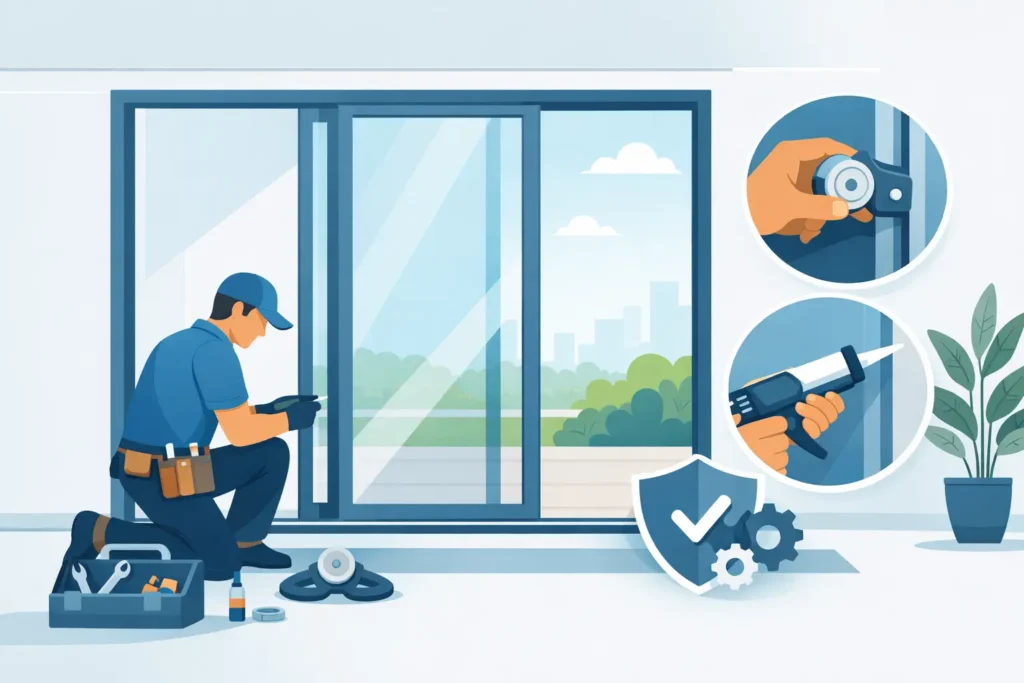
A sliding door that sticks, grinds, or jumps off the track can turn a simple trip to the patio into a daily frustration. In many homes and commercial properties, sliding glass door repair starts as a convenience issue but quickly becomes a security, safety, and energy-efficiency problem. When the door no longer closes properly or the glass is damaged, waiting usually makes the repair more expensive.
Most sliding doors fail in predictable ways. Rollers wear down, tracks bend or fill with debris, locks stop lining up, and older glass loses performance or cracks under impact and stress. The good news is that many of these problems can be fixed without replacing the entire door. The right repair depends on what is actually causing the issue, not just what the door feels like when you try to open it.
What causes sliding glass door problems?
Sliding doors work hard every day, and small issues build up over time. Dirt and grit in the track create drag, which puts extra pressure on the rollers. Once the rollers start wearing unevenly, the door becomes harder to move and may begin scraping the frame. That scraping can damage the track, misalign the lock, and make the door feel heavier than it should.
Weather also plays a role. Moisture can lead to corrosion on metal components, while heat and seasonal expansion can affect how the frame sits. In rental properties and commercial spaces with frequent traffic, wear happens even faster. A door that sees constant use will naturally need service sooner than one opened only once or twice a day.
Glass damage is another common reason for service. Chips, cracks, fogging between panes, and failed seals all affect performance. Sometimes the door still slides, but the glass no longer offers the insulation, appearance, or safety you need. In those cases, the repair may focus on the glass unit rather than the track or hardware.
Signs you need sliding glass door repair
A sticking door is the most obvious warning sign, but it is not the only one. If the handle feels loose, the lock no longer catches cleanly, or you notice gaps around the frame, the door is already telling you something is off. Drafts, water intrusion, and rising energy bills can also point to worn seals or alignment issues.
Noise matters too. A smooth sliding door should not grind, pop, or screech. Those sounds often mean the rollers are worn, the track is damaged, or debris has built up to the point that the door is being forced rather than gliding. If the door is difficult for children, older adults, or customers to operate, it is time to have it inspected.
Visible glass damage should always be taken seriously. Even a small crack can spread with temperature changes or impact. For businesses, damaged glass also affects appearance and customer confidence. For homeowners, it can become a safety concern fast.
Sliding glass door repair or full replacement?
This is where experience matters. Not every damaged door needs to be replaced, and not every old door is worth repairing. If the frame is in good shape and the problem is limited to rollers, track components, locks, handles, or the insulated glass unit, repair is often the most cost-effective option.
Replacement makes more sense when the frame is badly warped, the door has widespread corrosion, multiple parts have failed at once, or the system is so outdated that replacement parts are hard to source. It also depends on your goals. If you want better energy performance, updated appearance, and longer-term value, replacing the full door system may be worth the added cost.
For many property owners, the right answer is somewhere in the middle. A targeted repair can restore function now and buy time before a larger upgrade. That is especially useful for landlords, retail operators, and homeowners managing a budget without wanting to ignore the problem.
What professional sliding glass door repair usually includes
A proper service visit starts with inspection, not guesswork. The technician should check the rollers, track, frame alignment, lock, handle, weatherstripping, and glass condition before recommending a fix. A door that feels stuck may actually have more than one issue, and repairing only the obvious symptom often leads to repeat problems.
In many cases, the repair involves removing the door panel, replacing worn rollers, cleaning or restoring the track, and adjusting the door so it sits properly in the frame. If the lock is not engaging, the strike plate may need adjustment or the locking hardware may need replacement. If the seal has failed or the glass is cracked, the glass panel itself may be replaced while keeping the existing door frame.
This is also the time to address safety. Tempered or upgraded glass may be recommended depending on the condition of the current panel and the use of the space. Commercial properties may have additional concerns around code requirements, security, and visibility.
Why DIY fixes often fall short
It is tempting to spray lubricant into the track and call it done. Sometimes a quick clean helps, but many doors that seem dirty are actually dealing with worn mechanical parts. Lubricant can even make things worse if it attracts more debris or masks a failing roller that should be replaced.
Removing a sliding glass door is heavier and riskier than many people expect. The panels are awkward to handle, and improper removal can damage the frame, crack the glass, or create a safety hazard. Lock alignment and roller adjustment also require precision. A door that is slightly off may still move for a while, but it will continue wearing down the hardware and track.
For cracked or broken glass, professional service is the safer choice every time. Glass replacement needs the right measurements, the right product, and careful installation to restore both function and safety.
Residential and commercial needs are not always the same
Homeowners usually focus on ease of use, energy efficiency, and security. A patio door should slide easily, lock properly, and keep outside air where it belongs. Appearance matters too, especially if the glass is fogged or the frame is visibly worn.
Commercial clients often have a different set of priorities. In a retail setting or multi-unit property, a damaged sliding door can affect access, tenant satisfaction, and daily operations. Speed matters more because downtime costs money and creates liability concerns. Hardware may also be subject to heavier use, which changes the repair approach.
That is why it helps to work with a company that handles both residential and commercial glass service. The core repair principles are the same, but the urgency, materials, and long-term recommendations can differ.
Choosing the right company for sliding glass door repair
You want more than someone who can just swap a part. Look for a local company that responds quickly, explains the problem clearly, and works with quality materials. Straightforward pricing matters, and so does honest guidance about whether repair or replacement makes more sense.
Availability is another big factor. Sliding door issues do not always happen during business hours, especially when glass breaks or a door will not secure properly. A company that offers responsive service and can handle urgent situations gives property owners more peace of mind.
VL Group Glass Services works with homeowners and businesses that need practical answers, fast turnaround, and workmanship that holds up. That matters when the goal is not just to get the door moving again, but to restore safety, security, and day-to-day function without unnecessary delays.
How to protect your door after the repair
Once the repair is complete, a little maintenance goes a long way. Keep the track clean, avoid forcing the door when it feels resistant, and pay attention to changes in how it sounds or locks. Small adjustments are easier and less expensive than waiting for complete failure.
If your property has older sliding doors, periodic inspection is worth it. Catching worn rollers, seal failure, or early glass damage before it gets worse can help you avoid emergency service and extend the life of the door system.
A sliding door should open smoothly, close securely, and do its job without making you think about it. If yours is sticking, rattling, cracked, or refusing to lock, getting the right repair now is usually the simplest way to avoid a bigger problem later.