
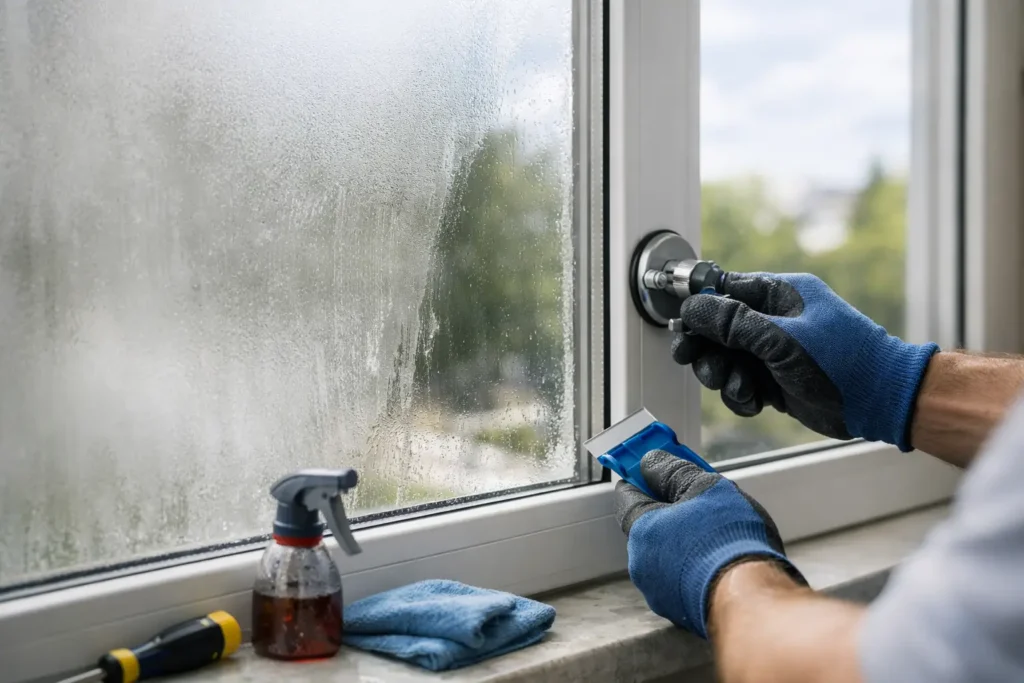
That cloudy film trapped inside your window is not something a paper towel will fix. If you are searching for how to repair foggy window glass, the first thing to know is simple – fog between panes usually means the insulated glass unit has failed, not that the glass itself is dirty.
For homeowners, property managers, and business owners, that matters because the right fix depends on where the moisture is and how far the damage has gone. Sometimes the glass can be serviced. In many cases, the better long-term solution is replacing the insulated glass unit while keeping the existing frame if it is still in good condition.
What causes foggy window glass?
Most modern windows use double-pane or triple-pane insulated glass. The panes are sealed together with an air or gas-filled space between them to improve energy efficiency and reduce temperature transfer. When that seal fails, outside air and moisture get into the space between the panes.
Once moisture enters, condensation starts to form inside the unit. At first, you may only notice fogging on cold mornings or during humid weather. Over time, the haze can become permanent. Mineral deposits may build up, and the glass can start to look streaked or etched from the inside.
This is why foggy glass is different from ordinary condensation on the room side of a window. Surface condensation can often be managed by improving ventilation or reducing indoor humidity. Condensation between panes points to seal failure.
How to tell whether the problem is inside or outside the glass
Before deciding how to repair foggy window glass, make sure you are looking at the right issue. If the moisture wipes off from the inside surface, it is a humidity or airflow problem in the room. If it wipes off from the outside surface, weather conditions may be the cause.
If the haze, water spots, or fog stay there no matter how much you clean, the problem is likely inside the insulated unit. That is the key sign that the seal has broken.
You may also notice a few related warning signs. The window may look worse in the morning, feel draftier than before, or show a rainbow-like distortion. In commercial spaces, fogged glass can also make storefronts look poorly maintained, even when the rest of the property is in good shape.
Can foggy window glass actually be repaired?
Yes, but there is an important distinction. You are usually not repairing the moisture problem by cleaning the glass. You are addressing a failed insulated glass unit.
In practice, there are two common approaches. One is defogging or moisture removal. The other is replacing the insulated glass unit. Which option makes sense depends on the age of the window, the condition of the frame, the severity of the fogging, and how important energy performance is to you.
Option 1: Defogging service
Defogging usually involves drilling very small holes in the glass assembly, removing trapped moisture, and installing vents or materials designed to reduce future condensation. This can improve appearance in some cases, especially when the fogging is mild to moderate.
The trade-off is that defogging does not truly restore the original factory seal or the same insulation value the window had when new. It may help you see through the glass again, but it is often more of a visual improvement than a full performance repair.
For older windows nearing the end of their service life, defogging may be a short-term option if budget is the main concern. For customers who want the best long-term result, it is often not the strongest fix.
Option 2: Insulated glass unit replacement
This is the solution most glass professionals recommend when the seal has failed. The old glass unit is removed, and a new sealed double-pane or triple-pane unit is installed into the existing frame, assuming the frame is still structurally sound.
This approach restores clarity, improves efficiency, and solves the root issue rather than working around it. It is often more cost-effective than replacing the entire window, especially when the sash and frame are still in decent condition.
For many residential and commercial properties, this is the best balance of cost, durability, and appearance.
How to repair foggy window glass the right way
If you want a real fix instead of a temporary improvement, the process starts with diagnosis. A technician should confirm whether the fogging is caused by seal failure, frame damage, poor installation, or another issue such as failed caulking around the unit.
After inspection, the next step is measuring the glass unit accurately. Insulated glass replacements need precise dimensions, the right thickness, and the correct specifications for the building. That can include tempered safety glass, laminated glass, low-E coatings, or other upgrades depending on where the window is installed.
Once the replacement unit is ready, the failed glass is removed carefully so the surrounding frame is not damaged. The new sealed unit is then installed, set properly, and sealed to support long-term performance. If the frame is warped, rotted, corroded, or otherwise compromised, replacing only the glass may not be enough. In that case, a full window replacement could be the smarter investment.
Why DIY foggy glass repair usually falls short
A lot of property owners look for a quick fix first, and that makes sense. Fogged windows are frustrating, and replacing glass sounds expensive. But DIY methods usually do one of three things – clean the wrong surface, hide the problem briefly, or risk making the unit worse.
Online tips often suggest drilling holes, using anti-fog sprays, or placing moisture-absorbing products around the frame. These methods do not restore a failed seal. In some cases, they can crack the glass, void warranties, or create a bigger repair bill.
There is also a safety factor. Many windows use tempered glass, oversized units, or sealed systems that should not be disturbed without the right tools and training. On patio doors, storefronts, and upper-floor windows, improper handling can become a real hazard.
When replacement is better than repair
Some fogged windows are clear candidates for replacement rather than service. If the glass shows internal staining, etching, or repeated moisture buildup, a visual repair may not get the result you want. If the window frame has damage, air leaks, or operational issues, replacing just the glass may only solve part of the problem.
Age matters too. If a unit is older and several windows in the property are starting to fog, that often signals broader seal failure across the building. At that point, it may be more practical to replace multiple insulated units at once rather than paying for repeated service calls.
For commercial buildings, appearance and energy performance both matter. A fogged storefront or office window can affect curb appeal, tenant satisfaction, and interior comfort. In those settings, replacement is often the cleaner and more professional-looking option.
What affects the cost?
The cost to fix foggy glass depends on the size of the unit, the type of glass, accessibility, and whether you need defogging, glass-only replacement, or full window replacement. Specialty shapes, safety glass, and commercial units will typically cost more than standard residential double-pane glass.
The good news is that many foggy windows do not require tearing out the whole frame. If the frame is in solid condition, replacing only the insulated glass unit can keep costs under control while still giving you a proper fix.
This is why a professional assessment matters. Two windows may look equally foggy, but one might be a simple glass replacement while the other has hidden frame issues or failed hardware that changes the scope of work.
Choosing the practical next step
If the fog is between the panes, do not waste time on repeated cleaning. Start with a straightforward inspection to confirm whether the insulated unit has failed and whether the frame is worth keeping.
A dependable glass company should give you a clear answer, not a sales pitch. You want to know what caused the problem, whether repair is realistic, and what option gives you the best value over time. For local property owners who want fast, honest service, that is the kind of approach VL Group Glass Services is built around.
Foggy glass is more than a cosmetic issue. It is a sign that your window is no longer performing the way it should. The sooner you deal with it, the easier it is to protect your comfort, appearance, and energy efficiency without paying for a bigger problem later.