
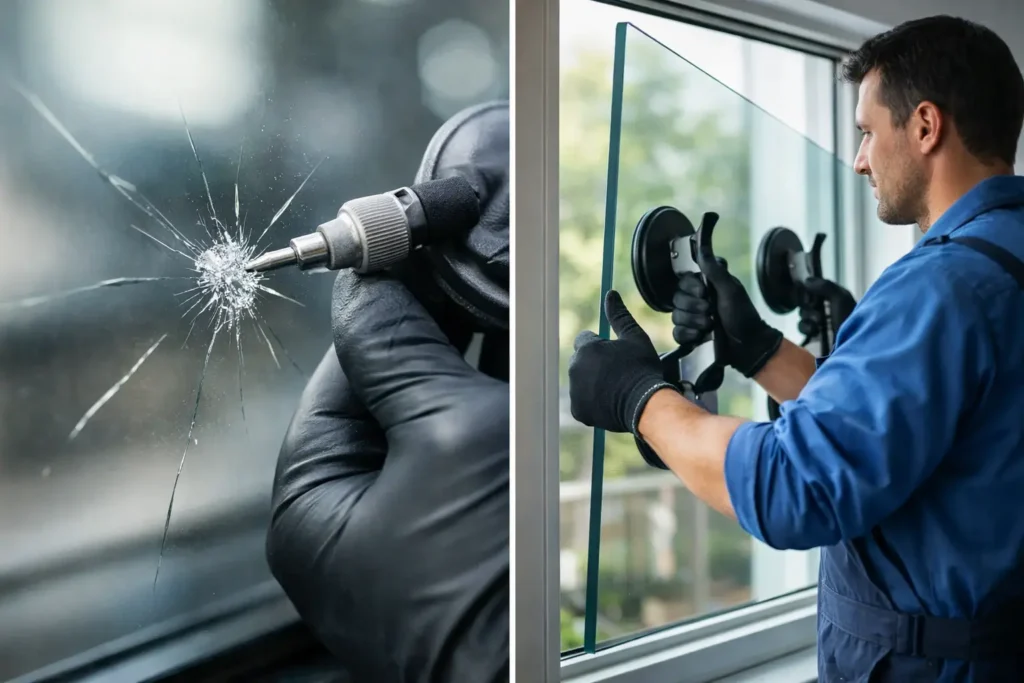
A small crack in glass rarely stays small for long. One door slam, a shift in temperature, or a little pressure during cleaning can turn a manageable problem into a full replacement. If you are asking can cracked glass be repaired, the honest answer is sometimes – but it depends on the type of glass, the location of the damage, and how the glass is being used.
For homeowners and business owners, that distinction matters. A minor cosmetic issue in one pane is very different from a cracked patio door, shower enclosure, or storefront panel. In some cases, repair is possible as a temporary or limited fix. In many others, replacement is the safer and smarter choice.
Can cracked glass be repaired in every situation?
No. Cracked glass cannot be repaired in every situation, and any company that says otherwise is oversimplifying the problem. Glass is not like wood or drywall. Once it has fractured, its strength has already been compromised.
What happens next depends on the crack itself. A short surface crack in a non-critical piece of glass may be stabilized in some situations. But if the crack runs across the pane, reaches the edge, spreads in multiple directions, or affects safety glass, repair usually stops being a reliable long-term option.
That is why professional assessment matters. The right decision is not based only on whether the crack looks small. It is based on whether the glass can still do its job safely.
When glass repair may be possible
There are situations where repair can make sense, especially when the damage is limited and the glass is not under heavy stress. Small chips or short cracks in certain non-structural glass surfaces may be repaired to improve appearance or slow further spreading.
This is more common when the damage is isolated, away from the edge, and not in a high-risk location. If the pane is decorative, not load-bearing, and not part of an insulated or tempered system, repair may be worth discussing.
Even then, repair has limits. A repaired crack does not return the glass to brand-new condition. The goal is usually to stabilize the damage or reduce visibility, not to fully restore original strength. That trade-off is important, especially in busy homes and commercial spaces where safety and durability matter.
When replacement is the better choice
In practice, replacement is often the better choice. If the crack is in a window that affects insulation, a door that gets daily use, a shower glass panel, or a storefront exposed to public traffic, replacement is usually the responsible recommendation.
That is especially true if the glass is tempered, laminated, double-pane, or part of a sealed unit. These products are built for performance and safety. Once cracked, they generally cannot be meaningfully repaired without compromising how they function.
Replacement is also the better option when the crack is growing, when moisture has gotten between panes, or when the glass creates a security issue. A repaired crack that fails later can cost more than replacing the pane correctly the first time.
The type of glass changes the answer
One reason this question is so common is that not all glass is the same. A crack in a picture frame is one thing. A crack in a sliding door or commercial entrance is something else entirely.
Standard single-pane glass may offer more room for limited repair, depending on where and how it is damaged. Tempered glass is different. Once tempered glass cracks, it generally needs replacement. It is designed to break in a specific way for safety, and that safety feature cannot be restored with a repair.
Insulated glass units, often called double-pane or thermal glass, are another category where replacement is usually required. If one pane is cracked, the seal and performance of the whole unit may already be affected. Repairing only the visible crack does not fix lost energy efficiency or moisture problems inside the unit.
Laminated glass can also be more complicated. Because it includes multiple layers with an interlayer, damage may not always look severe at first. But structural integrity and clarity can still be compromised.
Can cracked window glass be repaired?
Sometimes, but many cracked house windows end up needing replacement. If the crack is very small and the window is not in a high-impact area, repair may be discussed as a short-term measure. Still, if the window is drafty, part of a sealed unit, or exposed to weather, replacement usually makes more sense.
For property managers and homeowners, this often comes down to performance. A cracked window is not just a visual issue. It can affect comfort, heating and cooling costs, and home security. A quick patch may seem cheaper now, but if the crack spreads or the unit fails, the long-term cost can be higher.
Can cracked door or patio glass be repaired?
Door glass is a category where caution matters. Entry doors, patio doors, and sliding glass doors all handle movement, vibration, and repeated use. That stress makes cracks more likely to spread.
In most cases, cracked glass in a door should be replaced rather than repaired. The reason is simple. Doors are functional safety points in your home or business. If the glass gives way, it creates a risk for people and property.
The same goes for sliding glass doors and patio doors. Even a crack that looks minor can compromise daily operation, security, and weather protection. In these applications, dependable performance matters more than squeezing extra time out of damaged glass.
Shower glass and storefront glass usually need replacement
Shower enclosures and storefront systems are not good candidates for casual repair. Shower glass is typically tempered for safety, and storefront glass often needs to meet code, security, and performance requirements.
If either one cracks, replacement is usually the right move. For a business owner, a cracked storefront panel affects appearance, customer confidence, and safety. For a homeowner, cracked shower glass can become dangerous with very little warning.
This is where working with an experienced local team helps. A proper assessment can confirm whether the issue is isolated to the glass only or whether hardware, framing, seals, or installation conditions also need attention.
What not to do with cracked glass
A lot of people look for a quick fix online, especially when the crack seems minor. But DIY repair kits and temporary sealants have limits, and they can create problems if they delay the right solution.
Do not ignore a crack and assume it will stay the same. Do not apply pressure to the area while cleaning or moving the panel. Do not use the damaged door or window more than necessary if the crack is spreading. And do not assume that clear tape or resin makes the glass safe again.
Temporary measures may help contain the issue briefly, but they are not a substitute for professional repair or replacement. If the glass protects your home, your tenants, your customers, or your inventory, the standard should be safety first.
How a professional decides between repair and replacement
A qualified glass technician will usually look at a few practical factors. The first is the size, depth, and direction of the crack. The second is the type of glass and whether it is tempered, insulated, laminated, or standard single-pane. The third is where the glass is installed and how much stress it handles day to day.
They will also consider age, frame condition, seal failure, code requirements, and whether replacement parts are needed. In commercial settings, security and appearance may carry extra weight. In residential settings, energy efficiency and family safety are often the biggest concerns.
That is why the best recommendation is not always the cheapest upfront option. It is the option that solves the problem properly and reduces the chance of another service call a few weeks later.
The cost question most people are really asking
When people ask can cracked glass be repaired, they are often also asking whether they can avoid replacement cost. That is understandable. No one wants to pay for more work than they need.
But the better question is this: what will hold up safely and cost-effectively in the real world? A limited repair on the wrong type of glass can become wasted money if replacement is still needed right after. On the other hand, replacing the damaged glass promptly can restore safety, appearance, and performance in one step.
A straightforward inspection gives you a clearer answer than guesswork. Companies like VL Group Glass Services handle these situations every day, and the value is not just in the labor. It is in identifying the right fix before the problem gets worse.
If your glass is cracked, the safest next step is simple. Get it looked at before it spreads, before it becomes a security issue, and before a small problem turns into an emergency.