
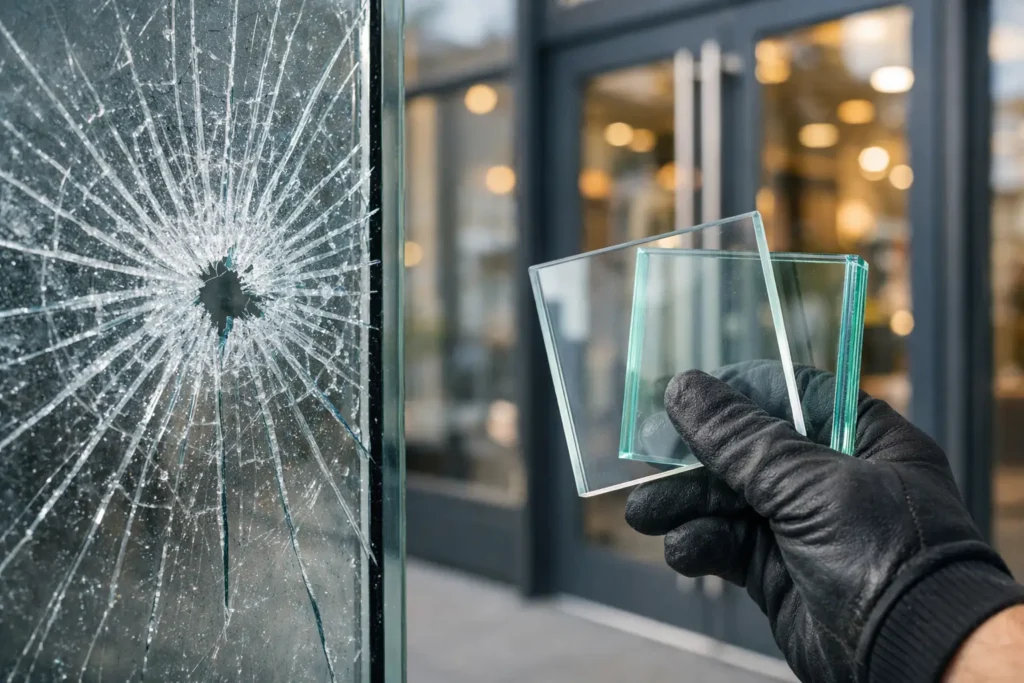
A broken storefront window can stop business before the day even starts. It leaves merchandise exposed, affects customer confidence, and may create a safety issue for staff and visitors. Choosing the best glass for storefront security is not simply about installing the thickest pane available. The right choice depends on your location, the type of business you operate, your insurance requirements, and the risks your property faces after hours.
For most retailers, offices, restaurants, and commercial properties, security glass should balance impact resistance, visibility, appearance, and replacement cost. A professional assessment helps you avoid paying for more protection than you need while making sure a damaged storefront does not become an easy point of entry.
What Makes Storefront Glass Secure?
Standard annealed glass is the least secure option for a storefront. It breaks into large, sharp pieces when hit, which can create an immediate hazard and leave a wide-open entry point. While it may be suitable for some low-risk interior applications, it is generally not the best choice for exterior commercial windows and doors.
Secure storefront glass is designed to respond differently to impact. Depending on the product, it may break into smaller pieces, stay attached to an internal layer, resist repeated strikes, or delay forced entry long enough for someone to respond. That delay matters. Many break-in attempts are opportunistic, and glass that takes more time and effort to defeat can discourage intruders from continuing.
Security also involves the full storefront system. Even high-quality glass can underperform if it is installed in a weak frame, has loose glazing, or is paired with damaged door hardware. Your glass, aluminum framing, locks, door closers, and surrounding panels should work together.
Best Glass for Storefront Security: Laminated Glass
Laminated glass is often the strongest all-around choice for storefront security. It is made with two or more layers of glass bonded to a clear interlayer, usually polyvinyl butyral or a similar material. When the glass is struck and cracks, the interlayer helps hold the broken pieces in place.
This makes laminated glass especially useful when preventing immediate access is the priority. An impact may damage the pane, but the glass can remain in the opening rather than falling away. That gives your business more protection against smash-and-grab theft, vandalism, and accidental impacts.
Laminated glass also offers practical benefits beyond security. It can reduce outside noise, block a high percentage of UV rays that fade merchandise and flooring, and improve safety around busy pedestrian areas. For retailers with displays close to the glass, those added benefits can be worthwhile.
The trade-off is cost. Laminated glass usually costs more than standard or tempered glass, and replacement can require additional lead time depending on its size and specification. Still, for businesses with high-value merchandise, street-facing windows, or a history of break-ins, it is often a smart investment.
When Laminated Glass Makes the Most Sense
Consider laminated storefront glass if your business is located in a high-traffic area, operates late hours, displays valuable products near windows, or has experienced vandalism before. It is also a strong option for storefront doors, sidelights, and large glass panels where broken glass could create a serious safety concern.
A thicker interlayer can provide greater forced-entry resistance, but the right configuration should be selected for the opening and the level of risk. More thickness is not automatically better if it creates unnecessary weight or requires frame upgrades.
Tempered Glass: Safe, Strong, but Not Always Security Glass
Tempered glass is heat-treated to make it stronger than standard annealed glass. When it breaks, it shatters into many small, rounded pieces rather than dangerous sharp shards. That makes it a common safety glass choice for storefront doors, entrance systems, and areas subject to human impact.
For everyday use, tempered glass is durable and dependable. It can handle regular door traffic, minor impacts, and temperature changes better than ordinary glass. However, it is not always the best option when forced-entry resistance is the main concern.
Once tempered glass fails, it can break apart completely and leave the opening exposed. An intruder may still need to apply significant force, but the pane does not generally remain intact after it shatters. That is why tempered glass is often appropriate for safety compliance, while laminated glass is better suited to properties that need greater break-in resistance.
In some storefront systems, a laminated and tempered combination may be recommended. This can provide the safety performance needed for a specific opening along with better resistance to impact and penetration. A qualified glass technician can confirm what works with your current frame and local building requirements.
Insulated Glass Units for Security and Efficiency
Many commercial storefronts use insulated glass units, also called double-pane glass. These units contain two panes separated by a sealed airspace or gas-filled space. Their main purpose is energy efficiency, helping reduce heat transfer and improving indoor comfort near windows.
Insulated glass alone is not automatically security glass. Its security performance depends on the type of glass used in each pane. For example, an insulated unit with a laminated exterior pane can offer both better thermal performance and stronger protection against impact.
This option can be valuable for businesses with large storefront windows exposed to direct sun, winter weather, or high heating and cooling costs. It does come with a higher upfront price, and failed seals can eventually cause fogging between panes. Still, choosing the right glass construction at the time of replacement can prevent the need for another upgrade later.
Security Film: A Useful Upgrade, Not a Substitute
Security window film can improve the performance of existing storefront glass. It is applied to the interior surface of the glass and helps hold fragments together after breakage. For some businesses, film is a practical way to improve protection when full glass replacement is not yet in the budget.
It is important to set realistic expectations. Security film does not make ordinary glass unbreakable. The glass may still crack, and a determined person may still gain entry. Its value is in slowing the process, reducing flying glass, and making cleanup safer.
Film can be a sensible short-term measure for lower-risk storefronts, especially when paired with good locks, exterior lighting, cameras, and an alarm system. For a property that has suffered repeated break-ins, replacing vulnerable glass with laminated security glass is usually the more dependable long-term solution.
Do Not Overlook the Storefront Door
The storefront door is often the most vulnerable part of the entire glass system. It gets constant use, has hardware that wears over time, and may include narrow glass sidelights that are easier to target than a large display window.
If your door glass is cracked, loose, chipped along the edge, or no longer sitting properly in its frame, arrange a repair promptly. Small damage can spread quickly, especially in tempered glass. A door that does not latch correctly or has worn pivots, closers, or locks can also compromise security even when the glass itself is in good condition.
For high-risk entrances, laminated glass in the door and sidelights may be worth considering. A professional can also inspect the frame, glazing stops, lock alignment, and hinge or pivot condition before recommending a replacement.
How to Choose the Right Storefront Glass
Start with the risk, not the product name. A small professional office with limited street exposure may only need tempered safety glass and reliable door hardware. A jewelry shop, electronics retailer, cannabis retailer, or business with expensive display inventory may benefit from laminated glass or a specialty security glazing system.
Think about what happens after business hours. Is the storefront visible from the street? Is it well lit? Are there nearby businesses or regular foot traffic? Does your property manager require a specific glazing type? The answers affect the level of protection that makes financial sense.
You should also factor in appearance. Clear glass keeps displays visible and welcoming, while tinted, insulated, or decorative options may improve comfort and privacy. The goal is not to make your business look closed off. It is to create a storefront that looks professional while being harder to damage or breach.
Plan for Emergency Glass Replacement
Even the right security glass can be damaged by a major impact, vehicle collision, severe weather, or determined vandalism. When that happens, the first priority is securing the opening quickly. Temporary board-up or emergency protection prevents further access while replacement glass is measured and ordered.
Keep a record of your storefront glass specifications, including approximate panel sizes, glass type, and any tint or coating. This can speed up replacement after an emergency. Property managers should also make sure tenants know who to contact when damage occurs outside normal business hours.
VL Group Glass Services provides professional storefront glass repair and replacement for businesses that need practical solutions, accurate installation, and fast response when security cannot wait.
A secure storefront should never be an afterthought. If your glass is outdated, damaged, or no longer matched to the risks around your business, have it evaluated before a minor weakness becomes an expensive interruption.