
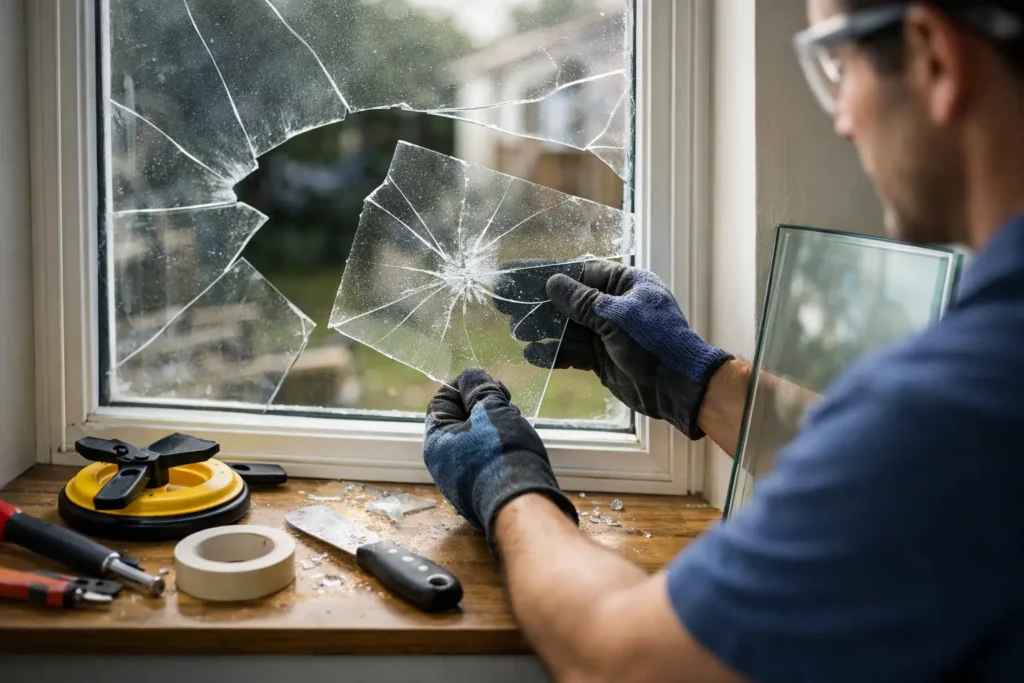
A broken window pane creates more than a draft. It can leave your home, rental unit, or business exposed to weather, moisture, pests, and security risks. Knowing how to replace a broken window pane starts with making the area safe, then identifying the type of glass and frame before ordering anything. A simple single-pane repair can be a reasonable DIY project. A modern insulated window, commercial storefront, or damaged frame usually calls for an experienced glass technician.
Start by Securing the Broken Glass
Do not begin by pulling loose pieces out with bare hands. Put on cut-resistant work gloves, safety glasses, long sleeves, and closed-toe shoes. Keep children, pets, customers, and tenants away from the area until cleanup is complete.
If glass is still in the opening, cover both sides with wide masking tape in a crisscross pattern. The tape helps hold fragments together while you remove them. Place a drop cloth, cardboard, or a heavy towel beneath the window to catch small pieces.
Carefully remove large loose shards first, working from the top of the opening down. Use pliers for stubborn pieces rather than forcing them with your hands. Sweep the sill and surrounding floor, then vacuum the area thoroughly. Small fragments can travel farther than expected, especially after a door slam or wind gust.
For an exterior opening that cannot be repaired right away, cover it temporarily with plywood or a rigid plastic panel. Tape alone is not a reliable weather or security barrier. If the break affects a ground-floor window, door glass, or storefront, temporary board-up service can protect the property while replacement glass is being prepared.
Identify the Window Before Ordering Glass
The process for replacing a broken pane depends heavily on the window construction. Older wood-frame windows often use a single piece of glass held in place by glazing compound and small metal points. These are the most practical windows for a careful DIY repair.
Many newer residential windows use insulated glass units, also called double-pane or triple-pane units. These units have two or three panes sealed together with a spacer between them. If one pane breaks, the full sealed unit usually needs replacement. Trying to replace only one layer can ruin insulation performance and allow condensation between the panes.
Vinyl, aluminum, and fiberglass windows may hold glass in place with removable stops, snap-in beads, or a factory-built sash. Patio doors, shower doors, sidelights, and storefront systems have different glass requirements and installation methods. Tempered glass and laminated safety glass may also be required by building codes in certain locations, including near doors, tubs, stairs, and low-level glazing.
Look for a small etched mark in a corner of the glass. It may identify tempered or safety glass. If the pane shattered into many small pebble-like pieces, it was likely tempered glass. Do not replace it with ordinary glass just because it appears to fit. The correct glass type matters for safety and code compliance.
Measure the Opening Correctly
Accurate measurement prevents delays and unnecessary expense. Measure only after all broken glass, glazing compound, and loose debris have been removed. For a traditional single-pane window, measure the width and height of the open glass recess, also called the rabbet, in at least two places.
Order the new glass slightly smaller than the tightest measurements. A common allowance is about 1/8 inch less in both width and height, though the exact clearance depends on the frame and installation method. Glass needs a little room to expand and settle. A pane cut too tightly can crack during installation or as temperatures change.
For insulated units, measure the visible glass, the full unit dimensions, and the overall thickness when possible. Take clear photos of the frame, spacer, hardware, and any markings. An incorrect insulated unit may not seat properly, seal correctly, or operate with the sash.
If you are replacing glass in a commercial door or storefront, do not rely on a rough measurement. Commercial glazing systems often use specific glass thicknesses, gaskets, setting blocks, and safety glazing. A professional measurement protects both the finished appearance and the building’s security.
How to Replace a Broken Window Pane in a Wood Frame
If you have confirmed that the window is a basic single-pane wood-frame window, gather the new pane, glazing compound, glazing points, a putty knife, pliers, a heat gun or scraper, paint, and exterior-grade primer. Work in dry conditions whenever possible. Glazing compound needs time to cure, and moisture can interfere with a good seal.
Remove Old Glazing and Prepare the Frame
Use a putty knife or scraper to remove old glazing compound from the frame. A heat gun on a low setting can soften stubborn material, but use it cautiously. Excessive heat can damage paint, dry out wood, or crack nearby glass.
Pull out the small metal glazing points with pliers. Inspect the wood rabbet once it is clean. Soft, rotted, split, or water-damaged wood should be repaired before installing new glass. Replacing the pane without addressing a failing frame can lead to another break or a persistent leak.
Brush away dust and apply primer to any bare wood. Let it dry fully. Then apply a thin bed of glazing compound around the rabbet. This bedding creates a weather-resistant cushion behind the glass.
Set the New Pane and Secure It
Lift the new pane carefully by the edges and set it into the opening. Press it gently into the bedding compound. Do not push hard at the corners. Glass can break under uneven pressure.
Install glazing points around the perimeter, placing them every 8 to 10 inches for most small windows. Use a putty knife to press each point into the wood while supporting the glass nearby. The points should sit flat and hold the pane securely without touching the visible surface.
Apply a smooth bead of glazing compound over the edge of the glass and frame. Shape it at an angle so rain sheds away from the window rather than collecting against the wood. Keep the glazing line neat and consistent. From the outside, it should cover the glass edge without blocking more glass than necessary.
Allow the compound to cure according to the product instructions before painting. Painting too early can trap moisture or cause the finish to crack. Once cured, paint the glazing and frame to protect the repair from sun and rain.
When a Professional Replacement Is the Better Choice
DIY work can save money on a straightforward single-pane repair, but it is not always the lower-cost option once tools, glass cutting errors, weatherproofing, and time are considered. Professional replacement is usually the better choice for insulated windows, large panes, tempered glass, overhead glass, patio doors, shower enclosures, and commercial storefronts.
You should also call for help if the frame is bent, rotted, loose, or damaged by impact. A new pane cannot solve a window that no longer closes, locks, or seals correctly. For property managers and business owners, fast professional service can also reduce liability and minimize disruption for tenants, employees, and customers.
VL Group Glass Services can assess broken residential and commercial glass, secure the opening, and install the correct replacement materials for the application. This is especially valuable after hours, when a broken window cannot safely wait until morning.
Avoid These Common Replacement Mistakes
The most common error is assuming every broken window uses ordinary glass. Safety glass, insulated units, and commercial glazing are not interchangeable. Another frequent problem is measuring the old pane instead of the cleaned opening. The broken pane may be chipped, incorrectly fitted, or no longer representative of the required size.
Avoid sealing a new pane with household caulk alone. Caulk may provide a short-term barrier, but it does not replace proper glazing, gaskets, or setting blocks. Also avoid overtightening fasteners or forcing glass into a frame. Glass is strong in the right application, but it is unforgiving when twisted, pinched, or set against a hard edge.
A properly repaired window should feel secure, close as intended, and keep out air and water. If the job involves more than a basic single-pane wood window, getting the right glass and installation method is often the best way to protect the property and avoid doing the same repair twice.