
A broken window changes the situation fast. Whether it was caused by an accident, a break-in, storm damage, or a cracked pane that finally gave way, knowing how to secure broken windows temporarily can help protect your property, reduce safety risks, and buy you time until a proper repair or replacement is completed.
The key word is temporarily. A quick fix can help keep out weather, discourage unauthorized entry, and prevent injuries from loose glass, but it is not a substitute for professional repair. If the damage involves a large opening, a storefront, a patio door, or shattered tempered glass, the safest move is often to secure the area and arrange service as soon as possible.
What to do first before you cover the opening
Start by keeping people away from the damaged area. Broken glass can spread farther than it looks, especially if the impact caused small shards to fall onto floors, furniture, sidewalks, or entryways. In a home, keep children and pets out of the room. In a commercial setting, block off the area so customers and staff do not pass through it.
If the pane is still partly in place, do not push on it or try to force out loose pieces with your hands. Glass under stress can shift suddenly. Put on thick gloves, closed-toe shoes, and eye protection before getting close enough to inspect the damage.
Next, take a quick look at the type of problem you are dealing with. A small crack is different from a fully broken single-pane window. A ground-level storefront opening is different from a second-story residential window with only one fractured section. The right temporary solution depends on the size of the opening, the weather, and how exposed the property is.
How to secure broken windows temporarily without making it worse
For many homeowners and business owners, the first goal is simple: stabilize the area. If there are loose shards still attached to the frame, carefully remove only the pieces that are clearly detached and likely to fall. Use gloves and place broken glass in a sturdy container, not a thin trash bag that can tear.
If the glass is cracked but mostly intact, clear packing tape can sometimes help hold the broken sections together until repair crews arrive. Apply the tape gently across the crack in a crisscross pattern on both sides if the pane is safely accessible. This is only for minor breakage. If the pane is bowing, rattling, or partly missing, skip the tape and move to covering the opening.
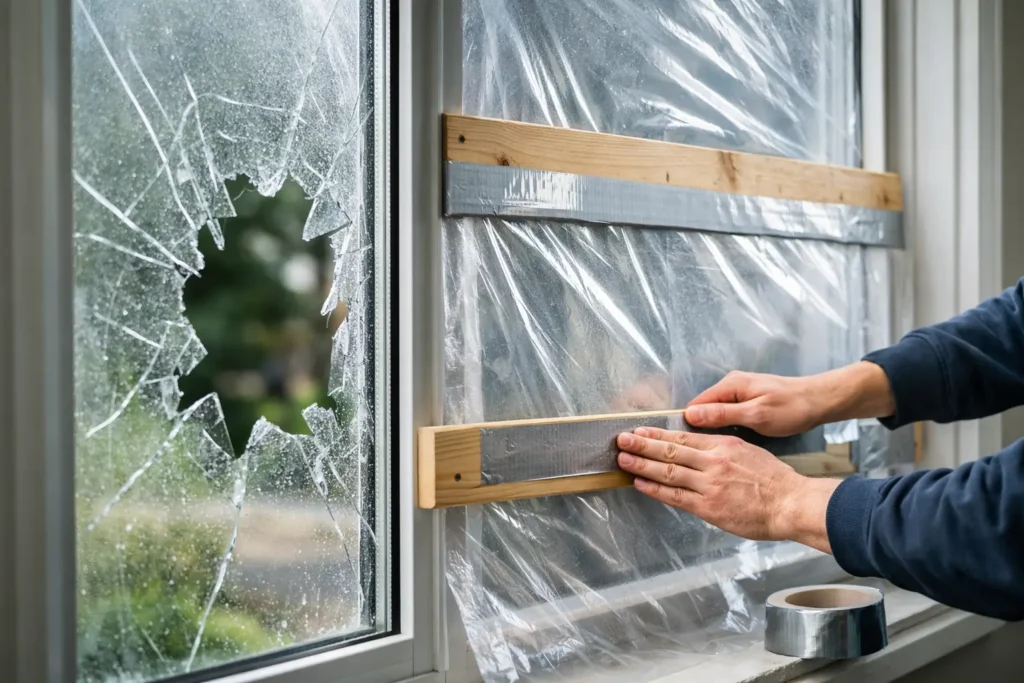
For a small to mid-sized opening, heavy plastic sheeting is often the fastest temporary option. It helps block wind and rain and creates a visible barrier. Cut the plastic larger than the damaged area so it overlaps the frame by several inches on all sides. Secure it to the frame with strong tape, not directly to jagged glass. If conditions are windy, plastic may flap or tear, so it works best as a short-term weather barrier rather than a security solution.
For larger openings or first-floor damage, plywood is usually the better choice. It provides a much stronger temporary barrier and is often the safest option for vacant units, retail spaces, and homes with accessibility concerns. The board should be cut to fit beyond the opening and attached to the window frame securely. If you are not experienced with tools or the frame is aluminum, vinyl, or part of a glass door system, it is better not to guess. Poor fastening can damage the frame and create a bigger repair.
Temporary materials that work best
Not every material that seems convenient is actually a good idea. Garbage bags, thin painter’s plastic, cardboard alone, or random household tape may fail quickly, especially in rain or direct sun. A temporary cover should do three things reasonably well: stay attached, reduce hazards, and protect the interior until the glass can be replaced.
Heavy-duty plastic sheeting, clear packing tape, duct tape used on the frame rather than the broken edge, and properly sized plywood are the most practical materials in most situations. If privacy matters, especially for a storefront or street-facing room, plywood offers more visual protection than clear plastic. If light is still needed inside, plastic may be the more workable short-term choice.
There is a trade-off here. Plastic is faster and easier, but weaker. Plywood is more secure, but more involved to install and not always suitable for every frame type. That is why temporary window security is never one-size-fits-all.
When a broken window is an urgent security issue
Some situations should be treated as urgent from the start. A window damaged during a break-in, a shattered patio door, and a broken storefront panel all create immediate security exposure. In those cases, weather protection is only part of the problem. You also need to prevent access.
If the opening is at ground level or visible from the street, avoid leaving it covered with only thin plastic overnight. That may keep out a draft, but it does very little to secure the property. A more solid temporary board-up is the safer move until professional glass replacement can be completed.
For commercial properties, there is also a liability concern. Customers or tenants can be injured by remaining glass, unstable framing, or makeshift coverings that fail. Property managers and retail operators should treat damaged glass as a safety issue first and an appearance issue second.
Common mistakes to avoid
One of the biggest mistakes is trying to remove every last piece of broken glass without the right protection. Another is attaching tape directly over sharp, unstable edges and assuming the window is safe. It may look contained for a few hours, then shift with temperature changes or vibration.
People also underestimate how much water can enter through a partially covered opening. Even a small gap can lead to wet flooring, damaged drywall, and problems around the window frame. In commercial settings, that can mean inventory loss or damage to interior finishes.
Another common mistake is waiting too long for the actual repair. Temporary coverings are exactly that – temporary. Sun, moisture, wind, and pressure changes can wear them down quickly. The longer they stay in place, the greater the chance of additional damage or a security problem.
How temporary security differs for homes and businesses
In a home, the top concerns are usually safety, weather exposure, and peace of mind. You want the room protected, your family safe, and the window restored before the damage spreads. If the broken unit is in a bedroom, living room, or sliding door, the urgency tends to be higher because the space is used constantly.
In a business, the priorities can shift. Security, customer access, liability, and appearance all matter. A cracked office window may be manageable for a few hours, but a shattered storefront or entry glass issue can affect operations immediately. Temporary board-up may be necessary just to open safely the next day.
This is where working with a responsive local glass company matters. A professional can assess whether the frame is still sound, whether a board-up is needed, and what replacement option makes the most sense based on the size and purpose of the opening. For urgent situations, fast service is often worth more than a patch that only partly solves the problem.
When to call a professional right away
If the broken area is large, the frame appears bent, the glass is part of a door, or the damage affects a storefront, call for help right away. The same goes for double-pane units with shattered inner and outer layers, overhead glass, or any situation where you cannot safely reach the damaged area.
Professional temporary securing is also the better choice when appearance and security both matter. A clean board-up or properly stabilized opening reduces risk and helps keep the property presentable while replacement glass is ordered. For homeowners, that means less stress. For businesses, it can mean staying operational.
At VL Group Glass Services, this kind of work is treated with the urgency it deserves. Fast response, experienced technicians, and practical solutions matter when the goal is to protect a home or business without adding more damage in the process.
A broken window rarely happens at a convenient time, but the next step does not need to be complicated. Secure the area, use a temporary barrier that fits the situation, and move quickly toward a proper repair so the problem stays small instead of turning into something more costly.