
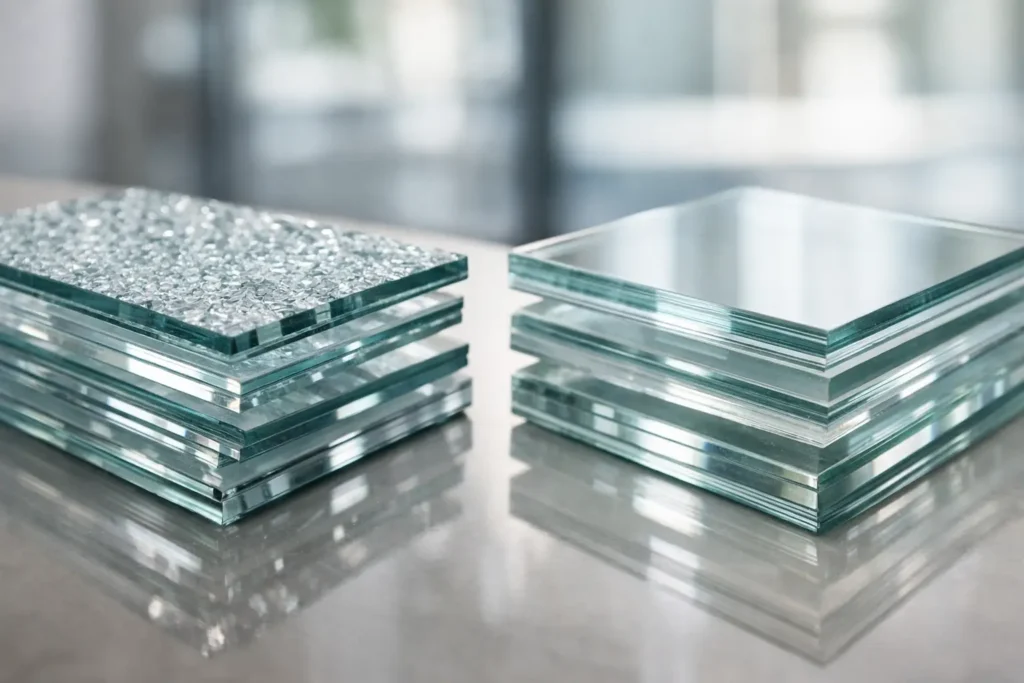
A broken patio door, a cracked storefront panel, or an upgrade for a bathroom enclosure usually brings up the same question fast: tempered glass versus laminated glass – which one is the right choice? Both are considered safety glass, but they perform very differently once impact, security, noise, and building requirements come into play. If you are replacing glass in a home or commercial space, the right answer depends on where the glass is installed and what you need it to do.
Tempered glass versus laminated glass: the basic difference
Tempered glass is heat-treated to make it much stronger than standard annealed glass. When it breaks, it shatters into many small, less sharp pieces. That break pattern is why tempered glass is commonly used in doors, shower enclosures, side windows, and other areas where human impact is possible.
Laminated glass is made by bonding two or more pieces of glass with a plastic interlayer, usually PVB or a similar material. When laminated glass breaks, the broken pieces tend to stick to that inner layer instead of falling apart immediately. That one detail changes a lot about how the glass performs in real life.
For property owners, this is where the comparison matters. Tempered glass is about strength and safe breakage. Laminated glass is about retention after breakage, added security, and often better sound control.
Where tempered glass makes the most sense
Tempered glass is often the practical choice when code requires safety glazing and the goal is durability at a reasonable cost. It is commonly used for shower doors, bathtub enclosures, glass doors, sliding doors, partitions, and many window applications near walking surfaces.
One reason people choose tempered glass is that it handles everyday impact well. It is several times stronger than standard glass, so it works well in busy homes and commercial settings where doors open and close constantly. For many replacement jobs, it gives customers the safety standard they need without adding cost for features they may not use.
There is a trade-off, though. Once tempered glass breaks, it usually breaks completely. It does not stay in place the way laminated glass does. That can be acceptable for many applications, but it is not ideal where security or containment after breakage matters.
Where laminated glass has the advantage
Laminated glass is often the better option when keeping the opening protected after impact is a priority. If the glass cracks, the interlayer helps hold the panel together. That can reduce immediate safety hazards and slow down forced entry.
This matters for storefronts, entry doors, sidelites, larger window openings, and properties in higher-risk areas. A laminated panel may crack under impact, but it often remains standing instead of collapsing right away. For business owners, that can mean better protection for merchandise and less exposure until replacement is handled.
Laminated glass also has another advantage homeowners and property managers appreciate once they experience it: noise reduction. Because of the interlayer, laminated glass can help cut outside sound more effectively than standard tempered glass in many setups. If your property faces traffic, pedestrians, or commercial activity, that benefit can be worth the extra investment.
Safety is not one-size-fits-all
People often hear that both products are safety glass and assume they are interchangeable. They are not.
Tempered glass is designed to reduce injury by breaking into small pieces. That is a safety benefit, especially in bathrooms, doors, and other impact-prone areas. Laminated glass is designed to reduce injury too, but in a different way – by staying together after breaking.
So which is safer? It depends on the risk.
If the concern is accidental human impact, tempered glass is often a strong fit and may be required by code in certain locations. If the concern is break-in resistance, overhead risk, storm exposure, or maintaining a barrier after damage, laminated glass may be the better answer. In some projects, both are even used together in specialized glass assemblies.
Tempered glass versus laminated glass for homes
For homeowners, the choice usually comes down to the room, the opening, and the problem being solved.
In showers, tempered glass is the standard choice because it is strong, clean-looking, and made for high-contact areas. For patio doors and sliding glass doors, tempered glass is also common, though laminated glass may be worth considering if security or outdoor noise is a concern.
For windows near a street, a play area, or a backyard where impact is possible, laminated glass can offer peace of mind because it stays together better after cracking. For upper-level windows or areas where falling glass would create more risk, laminated glass may also be preferred depending on the design and code requirements.
If your main concern is simply replacing broken glass quickly and affordably, tempered glass is often the straightforward solution. If your concern is security, noise, or holding the opening together after damage, laminated glass deserves a closer look.
What commercial property owners should consider
Commercial jobs usually have more variables. Storefront systems, office partitions, entry doors, display windows, and tenant improvement work all have different performance demands.
For storefronts, laminated glass often makes sense because breakage does not always mean immediate collapse. That can help protect the business while repairs are being arranged. It also adds a layer of deterrence against smash-and-grab attempts. Tempered glass is still common in commercial doors and other high-traffic areas because of its strength and code compliance.
Property managers also need to think beyond the glass itself. Downtime, liability, building code, tenant safety, and appearance all matter. The cheapest option upfront is not always the most cost-effective if it leads to faster failure, weaker security, or another replacement sooner than expected.
Cost differences and what drives them
Tempered glass is often less expensive than laminated glass for many standard applications, which is one reason it is widely used. It provides strong safety performance without pushing the project cost too high.
Laminated glass usually costs more because of its layered construction and added performance benefits. The final price depends on thickness, size, customization, tint, edgework, and whether the glass is part of an insulated unit or specialty system.
That said, price should be looked at in context. If laminated glass helps reduce break-in risk, limits disruption, or improves comfort in a noisy location, the extra cost may be justified. A good glass assessment should focus on value, not just the lowest line item.
Building code matters more than preference
This is the part many customers do not see until the job is underway. Glass selection is not based on preference alone. Certain areas require specific safety glazing by code, and some openings may call for one product over another depending on the application.
Doors, sidelites, shower enclosures, glass near stairs, and low window areas often have safety requirements. Commercial spaces may also have additional standards based on occupancy and design. That is why professional measurement and product selection matter. Ordering the wrong glass can delay the project and create extra cost.
A dependable glass contractor should explain what is required, what is optional, and where an upgrade makes sense. Straight answers save time and prevent expensive mistakes.
How to choose the right glass for your project
If you are deciding between tempered glass versus laminated glass, start with the real-world problem, not the product name. Ask what the glass needs to handle. Is it mainly about impact safety? Is security a concern? Do you want better noise control? Will the area stay exposed if the glass breaks?
For many home repairs and replacements, tempered glass is the practical and budget-friendly answer. For many storefronts, entry areas, and higher-security installations, laminated glass offers benefits tempered glass cannot match after breakage. Neither option is automatically better across the board.
At VL Group Glass Services, this is the kind of decision that should be made with clear guidance, not guesswork. The right glass should fit the opening, the code, and the way the property is actually used.
If you are replacing damaged glass or planning an upgrade, the best choice is the one that solves the problem the first time. Good glass should do more than fill a frame – it should make the space safer, more functional, and easier to live or work in.